
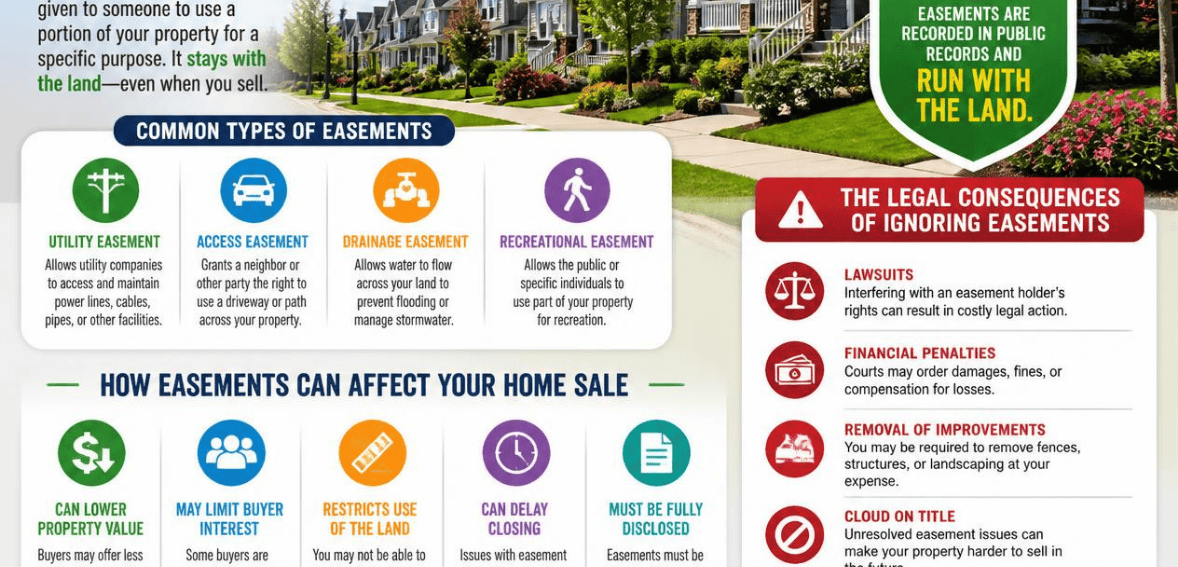
You found a buyer. The price is right. Then the title report lands on your desk, and there it is: an easement you barely knew existed. Suddenly your fast, clean closing feels like it’s stuck in mud.
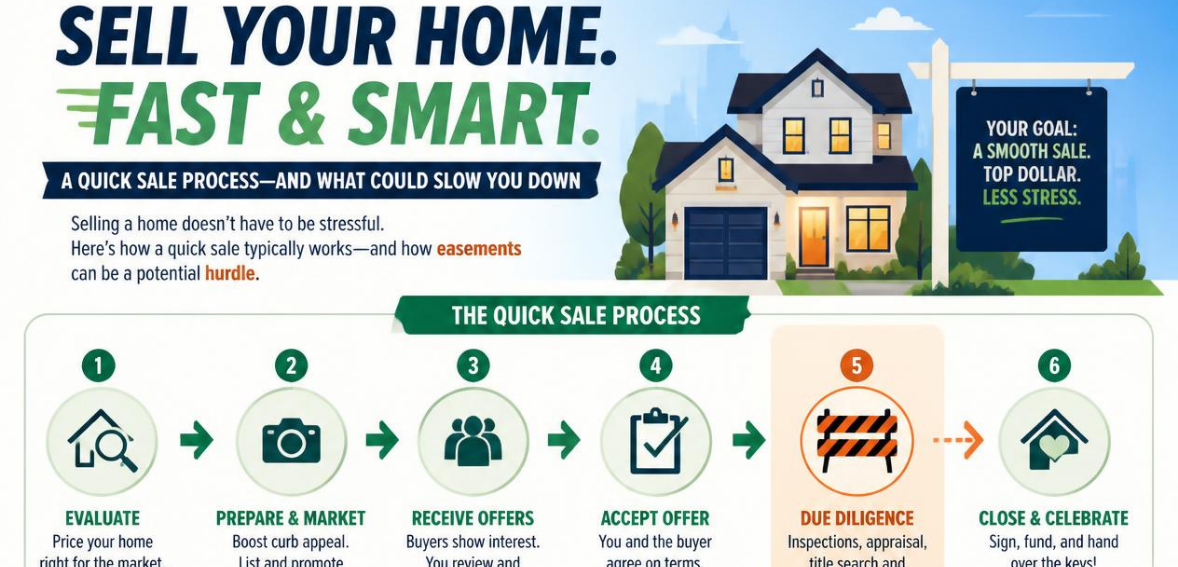
You’re not alone if this sounds like a situation you may have encountered. Using or having the right of easement in property legally owned or controlled by another can cause confusion for a property seller. This can delay the transaction. Buyers can become apprehensive about the value of the property in question. Therefore, it’s important that a seller understands what an easement on the property is to plan accordingly for the best estimate of time that the sale will take.
This guide is direct with no legal jargon. It’s simply what you need to know.
What Is an Easement, in Plain English?
An easement allows a party to utilize a specific portion of your land for a given purpose. You maintain ownership of the property. You retain the title. However, another individual or entity possesses a limited right to use the specific portion of your land.
Consider the needs of a power company that must access the utility lines that are located along the rear portion of your lot. Consider a neighbor that may only reach the main road if they cross over your driveway. These access rights are easements. Easements are rights that are attached to the land and not to you as the landowner.
This point may be one of great significance of all that is stated in this article. Easements are attached to the land and are the rights of the land when sold to another. You may not terminate the easement prior to the sale of the land.
Common Types of Easements Found on a Home
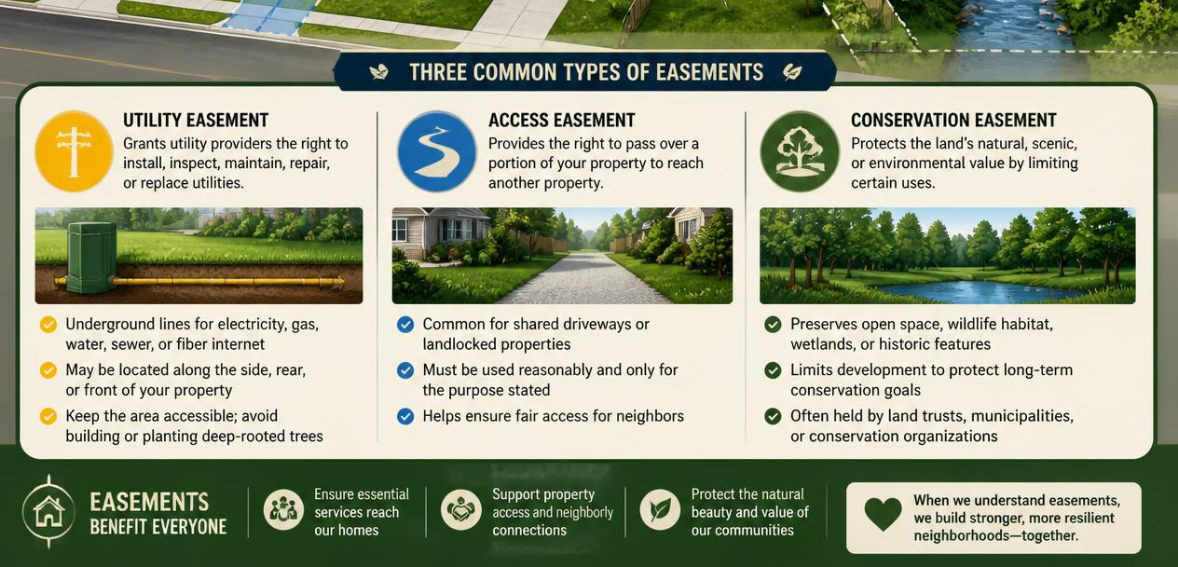
Not all easements are equal. Some are harmless. Others can restrict what a buyer can build or do. Knowing which type sits on your property helps you set expectations early.
Express, Implied, and Prescriptive Easements
Express easements are easy to understand. They are created with a written document that is signed by both parties and recorded with the county. The terms are straightforward, and all the parties involved refer to the same document.
An implied easement occurs as a necessity, and therefore, it is more difficult to spot. This type of easement most often occurs when a property is landlocked.
Many sellers are surprised by a prescriptive easement. It is created when a person openly, continuously, and without permission uses a part of a landowner’s property for years. This type of easement can give a right to the use of a property. An example is if your neighbors have used a path that has worn down over the years for the last ten years.
Easement in Gross vs. Appurtenant Easement
Delaware law recognizes two broad categories, and the difference affects your sale. An easement in gross benefits a specific person or company rather than a piece of land. A utility easement is the everyday version. Notably, an informal personal easement in gross often does not transfer to a new buyer, which can actually simplify your closing.
An appurtenant easement involves two properties. One property benefits, and the other is burdened. A shared driveway between two homes is a common case. This type sticks with the property through every future sale.
How an Easement Issue Can Affect Selling Your House in Delaware
Here’s where the timeline pressure comes in. An easement doesn’t just sit quietly in the background during a sale. It can surface at the worst possible moment and force everyone back to the table.
Easements as a Cloud on Title
When a title search is done by the buyer’s lender, a clear search is the primary goal. Unrecorded easements can result in a “cloud on title.” These undisclosed encumbrances are an issue the closing agent will resolve before the transaction can proceed.
The existence of an unexpected easement will cause the lender to place a hold and the buyer’s attorney will likely generate additional inquiries. As the seller, you will be required to produce documentation and define your property lines to enable the transaction to proceed. This can take several days, time that you may not have.
Delaware property sellers trying to meet an expedited closing will find that delays caused by a recorded easement will be the highest cost of all. Since recorded easements cannot be removed, they can only be disclosed and defined.
The Impact on Property Value and Buyer Interest
An easement can push value up or down depending on its nature. A conservation easement that protects a scenic view might appeal to some buyers. A utility corridor cutting through the yard, or power lines overhead, can do the opposite.
Some buyers simply walk away when they see an access right on the survey. Others stay but negotiate harder. Either way, a property carrying an easement issue can take longer to sell and may fetch a lower price. That’s the trade-off sellers need to plan for, not discover at the closing table.
Easement Disclosure Rules When You Sell a House in Delaware
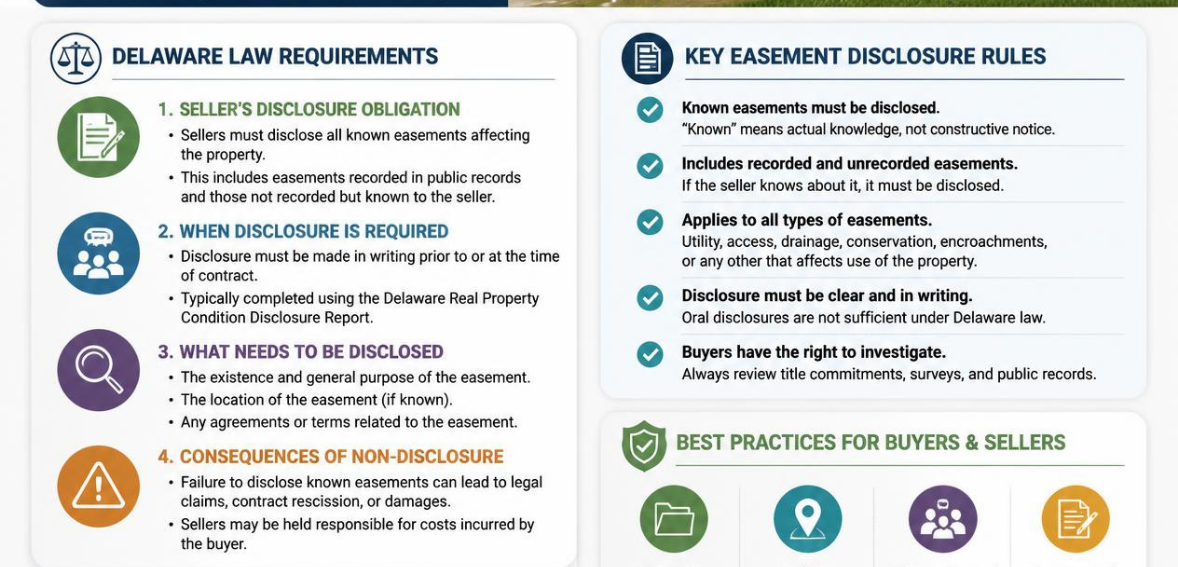
Delaware takes seller honesty seriously, and this is where an easement issue can turn into a legal one if you’re careless.
Chapter 25, Title 6 of the Delaware Code obligates residential property sellers to disclose material defects. Delaware uses the Seller’s Disclosure of Real Property Condition Report, which is a Real Estate Commission-approved form. Sellers give this report to buyers prior to making an offer, and the report then becomes an integrated part of the sale agreement.
The form asks for this information. There is a section that asks whether you know of any right-of-way, easements, or any similar encumbrances relating to the property.
Answering that question should not be left to chance. An easement, especially one that impacts the use and/or the value of the property, is an example of a material defect that must be disclosed. If you don’t disclose it, then the buyer retains the right to sue you for nondisclosure. Most other jurisdictions besides Delaware have the same regulations, so disclose for your sake as the seller, not for the buyer.
And to help the process move quicker, don’t wait. The offer is more likely to come through if the buyer knows that you disclose encumbrances prior to submission of the offer.
How to Handle an Easement Issue and Still Sell Fast
An easement issue when you sell a house in Delaware is manageable. Sellers close on properties with easements every single day. The key is getting ahead of it instead of reacting late.
Order an Early Title Search
Don’t let surprises happen on the buyer side. To avoid issues, order a title search before you list the title or right after you go under contract. This will give you a chance to respond to any recorded liens, easements, or boundary issues that show up early in the search.
If you do see something, you will want to get a real estate attorney involved. They will be able to interpret the easement for you, show you where the restrictions are on the property, and assist you in demonstrating this to the potential buyers. Answering the buyer’s concerns before they ask is much more effective than remaining silent.
Another layer of protection for you and your buyer is title insurance. The buyer will have a lot of confidence moving forward with the sale knowing that a defect in the title that is not discovered until later will be covered under the policy.
Selling to a Cash Buyer
When an easement, a needed repair, or a tight deadline makes a traditional listing feel risky, many Delaware homeowners look at cash buyers. Cash sales skip the lender approval process, which is often where easement-related delays pile up.
iBuyer.com
Platforms like iBuyer.com facilitate connections between home sellers and cash buyers that will purchase the property in its current state. These cash offers often result in a transaction in 7 to 21 days compared to the traditional 30-day home sale that we see in Delaware. The convenience of cash offers does come at a cost and is usually less than the full market value of the home.
With regard to the complicated easement issues, the cash offer could be the right choice when under time constraints, despite being a lower offer on the home. Cash offers provide certainty and speed. However, even an as-is sale must follow the disclosure laws in Delaware. Anything you know about the property must be disclosed.
Conclusion
An easement is not the end of your home sale. It’s a detail you plan around. The sellers who struggle are the ones who find out too late, at the closing table, with a nervous buyer and a ticking clock. The sellers who breeze through are the ones who did the homework early.
So do the homework. Order a title search before you list. Fill out your Delaware disclosure form honestly and completely. Bring in an attorney if anything looks murky. And if the easement issue and your timeline don’t play nicely together, weigh a cash sale as a faster exit.
Handle it that way, and an easement stays what it should be: a footnote in your sale, not a roadblock.
This article is for general information only and is not legal advice. For guidance on your specific situation, consult a licensed Delaware real estate attorney.
Frequently Asked Questions
Can I sell my house in Delaware if it has an easement?
Yes. You can absolutely sell a house that has an easement. Most properties carry at least one, often a routine utility easement. The important thing is to disclose it on your Delaware Seller’s Disclosure of Real Property Condition Report and be ready to explain what it covers. Buyers close on homes with easements constantly.
Do I have to remove an easement before I sell?
Usually not, and often you can’t. A recorded easement runs with the land and transfers to the new owner automatically. Your job is to disclose it clearly, not to erase it. In rare cases an unused or improperly created easement can be released or challenged, but that’s a conversation for a real estate attorney.
Will an easement lower my home’s value?
It can, though not always. A utility corridor, overhead power lines, or a shared driveway may reduce buyer interest and drag out the sale. Some easements, like a conservation easement protecting a view, may have little effect or even appeal to certain buyers. The impact depends entirely on what the easement restricts and where it sits.
What is the fastest way to sell a house with an easement issue in Delaware?
Selling to a cash buyer is generally the quickest route. These deals skip lender approval, where easement-related title delays often occur, and many close in about 7 to 21 days. You’ll likely accept a price below full market value, but you gain speed and a simpler process. Delaware disclosure rules still apply, so be upfront about the easement either way.