

The process for selling a house held in a trust in Delaware involves understanding the trustee’s powers, the required documents, and the timeline. The trustee’s powers in Delaware are derived from 12 Del. C. § 3325, which governs the handling and sale of a house in a trust, but they also depend on the terms set forth in the trust agreement.
Who the Trustee Is Under Delaware Law

In Delaware, the trustee is the individual or entity legally empowered to manage a trust. The trustee’s role is to manage, hold, and administer the trust’s assets in accordance with the guidelines set forth in the trust agreement, also called the governing instrument. This instrument provides a detailed description of the trustee’s duties, powers, and who qualifies as an “interested person.”
When it is time for a Delaware trust property sale, the trustee represents the beneficiary and owns the title to the property. This implies that the trustee signs the deed to sell the property. The trustee’s power to manage and sell the trust’s assets is derived from the trust agreement and is also supported by Delaware law under Title 12. This ensures the assets are managed properly.
Statutory Powers to Sell Trust Property: 12 Del C 3325 Trustee Powers

Delaware law grants a trustee broad powers to manage trust assets, including real estate. In this regard, under Delaware law, specifically 12 Del. C. § 3325, a trustee may buy or sell property, for cash or on credit, through public or private sale, provided there are no restrictions under the trust. In simple terms, this means a trustee may sell a house under a trust without further permission.
Trust Instrument Controls Specific Authority
Although Delaware law grants broad trustee powers, the rules governing their use are set forth in the trust document. The law states this is done “without limiting the authority conferred by § 3324,” meaning a trustee is free to exercise this power unless the trust document prohibits it.
If the trust document establishes certain rules, such as obtaining beneficiary consent, restrictions on when a sale can be conducted, and rules for successor trustees, those rules must be followed.
Conveyance of Title to a Buyer
When the trustee sells a house, the title change is handled by the trustee in their capacity as a fiduciary. This means the trustee signs the deed to the property, which, in turn, establishes the new owner’s legal title to the property. Since the trustee holds title to the property on behalf of the beneficiaries, the deed will list the trustee as the seller and grant the buyer full title to the property, also called fee simple.
However, if in any situation the trust does not grant this power to the trustee, the trustee may apply to the court under 12 Del. C. § 3533 to complete the sale and grant title to the property without any restriction.
Selling a House Held in a Trust in Delaware: Required Documents and Trustee Verification

Certification of Trust
A certification of trust is normally utilized in lieu of the actual trust in Delaware. This document proves the existence of the trust, the trustee, and their powers, including the sale of land. The certification may also indicate whether the trust is revocable or irrevocable and who must sign to complete the transactions.
Excerpts from the Trust Instrument
In some cases, a title company may request access to certain sections of the trust instrument. These include information on the trust’s identification and the trustee’s authority to sell the land, as well as the rules governing the authority to sign.
Trustee Identification and Authority Documentation
Settlement agents require identification of the trustee to ensure the correct person signs the deed. This is normally done through identification cards like driver’s licenses or passports. If the trustee is a company, other documentation is required. Proper identification is important to ensure the sale is valid under Delaware trust law.
Court Order (If Needed)
In situations where the trust is unclear and requires the approval of multiple trustees, a court order from the Court of Chancery in Delaware may be required. This would then give the trustee the authority to sell the property and provide official verification of the sale.
Deed or Title Documentation
To sell the property without problems, Delaware law requires the trustee to hold legal title to the property. This would require the trustee to provide documentation of the deed to prove that the property is officially held in trust, thereby giving them the legal power to proceed with the sale. This helps ensure that the property is sold to the buyer in accordance with Delaware property laws.
Tax and Lien Releases
Finally, before the sale is closed, proof of the payment of taxes, liens, or a mortgage payoff is more necessary than one can imagine. This is to ensure that the sale of the property is not compromised in any way, thereby protecting the buyer and meeting legal requirements.
Timeline for Selling a House Held in a Trust in Delaware
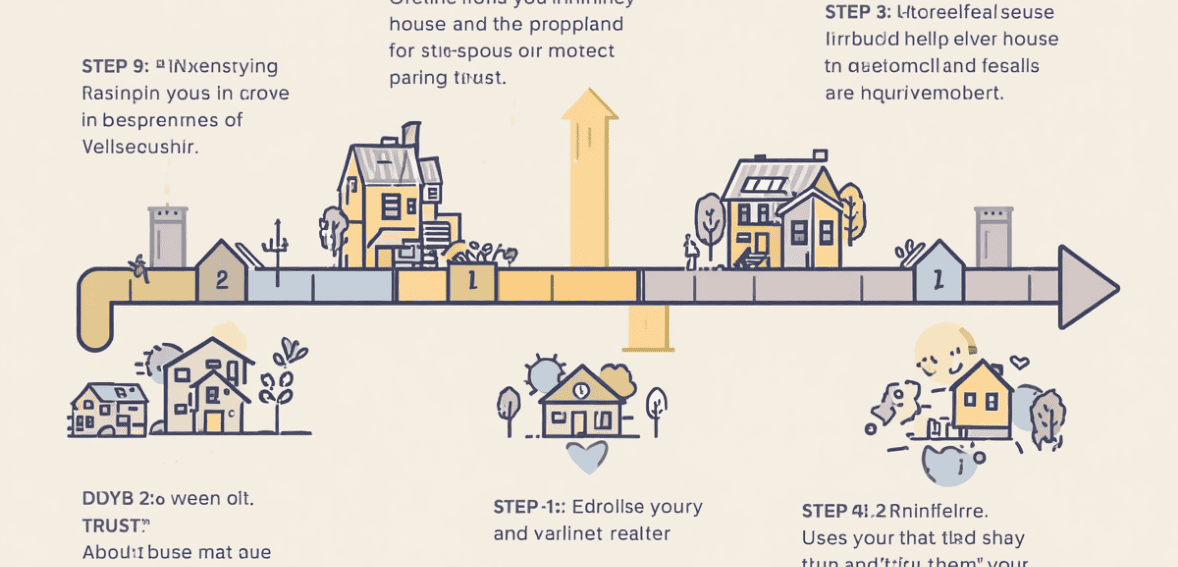
1. Review the Trust Agreement (1-3 Days)
The trustee’s first action is to review the trust agreement to make sure they have the authority to sell the property. This is important because, although Delaware law provides that trustees have general powers under 12 Del. C. § 3325, the trust agreement holds all the authority and sets the rules the trustee must follow to keep everything organized.
2. Obtain Trustee Authorization (1-7 Days)
If the trust agreement requires authorization to obtain approval from beneficiaries or other co-trustees, this will be an important step in the process to avoid potential problems in the future. This ensures that all parties involved in the transaction are aware of and approve the process to sell the property.
3. Hire Real Estate Professionals (1-2 Weeks)
The trustee will need to hire a real estate agent experienced in selling trust property, as well as a Delaware-licensed attorney, if necessary. This will ensure that the legal process is followed properly without any hassle. A professional can also assist the trustee in setting the fair market value, thereby giving both parties the confidence they need.
4. Prepare the Property for Sale (2-4 Weeks)
The trustee will need to make the necessary repairs to the home before listing it. This will ensure that the home looks attractive to potential buyers. This will not only allow the trustee to sell the home quickly but also to receive the best possible price.
5. Contract Execution & Due Diligence (2–6 Weeks)
The buyer conducts various inspections, appraisals, and financial investigations after accepting the offer. The trustee furnishes the required disclosures and documents, including affidavits or certifications. Effective management of this process helps maintain the transaction’s pace and ensures compliance with Delaware property laws.
6. Closing Preparation (1–2 Weeks)
The trustee collaborates with attorneys and title companies to close the deal. The law of Delaware permits trustees to use a trustee’s deed for transferring properties. Completing documents, including liens and taxes, helps avoid delays during the closing of the deal.
7. Closing & Transfer of Title (1 Day)
On the closing day, the trustee will sign the necessary documents, including the trustee’s deed, transferring the property to the buyer. This will involve depositing the sale proceeds into the trust account and issuing closing statements. This will complete the legal process of selling the property and transferring its ownership.
8. Post-Sale Actions (1-3 Days)
After the closing, the trustee will transfer the funds in accordance with the trust, pay any outstanding costs, and submit the tax returns. This will record the entire process, thereby successfully concluding the sale.
Tips to Sell a House Held in a Trust Faster
It is possible to sell a house in a trust in a timely fashion by planning and preparing for the sale. This begins with checking the trust terms to ensure the trustee has the power to sell the property and obtaining any necessary approvals from the beneficiaries. Secondly, it is important to find a real estate agent and a Delaware lawyer who specializes in the sale of property held in trust.
Thirdly, making the house valuable by making any necessary repairs, decluttering, and staging the property will make it more attractive to potential buyers. A professional appraisal will help determine a reasonable sale price, saving time on negotiations.
Additionally, having all the necessary documents in order, such as the trust agreement and trustee certification, facilitates a smooth process. Further, keeping the beneficiary informed and resolving any issues they may have helps prevent conflicts that could delay the process.
Also, remember: accommodating the buyer’s inspection schedule and considering a pre-listing inspection can minimize time on the market. Last but not least, being responsive to offers, negotiating effectively, and working with professionals in the field help expedite the process.
Conclusion
Selling a house in Delaware held in a trust is made easier by ensuring the trustee follows the proper procedures. This means that by adhering to the terms of the trust agreement, following the Delaware closing process, preparing all required documents, and working with professionals in the field, the sale will proceed smoothly and successfully.
FAQs
Can a trustee sell real estate without beneficiary consent?
Yes, if the trust allows it; otherwise, the beneficiaries’ consent is required.
What documents prove trustee authority at settlement?
Certification by the trustee, the trust deed, and in some cases, a court order are the documents that confirm the trustee’s authority to sell the property.
Does a trust sale take longer than a normal sale?
A sale under a trust agreement is slower than a typical sale due to the legal procedures and rules that must be followed when selling the property.
What if there are multiple co-trustees?
All the trustees must agree and sign the documents, unless the trust deed allows one of the trustees to act independently.
How to sell an inherited trust house in Delaware?
The process of selling an inherited trust house in Delaware involves dealing with the trustee, following the trust’s terms, and complying with Delaware property and tax laws.
Can the successor trustee sell the house?
Yes, the successor trustee who sells the house must follow the trust’s terms and provide legal documentation.
What are the necessary documents for the settlement of the trust in Delaware?
The trust documents for settlement in Delaware include the trust agreement, trustee certification, and deeds.