

You just got a letter from the county. Your house has been condemned. Your stomach drops. Your mind races through worst-case scenarios. Can you even sell a house like this, or are you stuck with a property nobody wants and a bill you can’t pay?
Condemned houses can be sold in Delaware, and you don’t need to spend money to make this happen. Most homeowners sell through a cash sale, and you can too. You will learn the definition of condemnation and your rights in a sale, along with how to sell a condemned house in Delaware without the loss of your sanity or money.
What Does It Mean When a House Is Condemned in Delaware
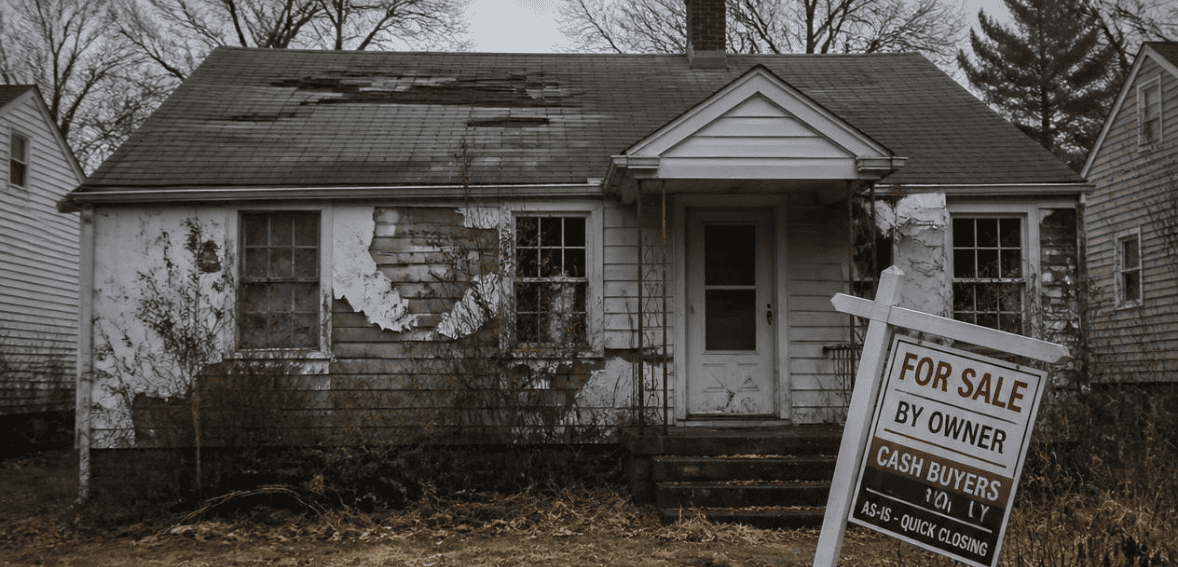
A condemned house is a property that local officials have declared unsafe or unfit for people to live in. This label usually comes from a city or county code enforcement office after an inspection turns up serious problems. Structural damage, failing plumbing, exposed wiring, mold, pest infestations, and fire damage are common triggers. Once a property gets tagged, the owner receives official notice and a deadline to correct the violations.
Delaware rarely sees overnight condemnation. First comes a code violation notice. Property owners get a chance to answer the notice and/or make repairs to the property. If repairs are still not made, a hearing will be scheduled. Once formal condemnation takes place, property owners have 30 to 60 days to either make the repairs, request an inspection, or obtain the necessary permits. If the property owner does nothing during that time, the local government is free to carry out any necessary actions, which can include demolition, and bill the property owner for the costs incurred.
Eminent domain is a less frequent way to obtain property. This is when a government agency needs to acquire property to build a road, utility, or some other public infrastructure. In this case, property ownership is transferred from a private citizen to the government, and the state is required to pay an appraised amount to the former owner.
If the former owner believes the offer is too low, they can order a new appraisal and negotiate with the state, but it is not uncommon for these disputes to end up being resolved in court. If you find yourself in this situation, it may be necessary to obtain the services of a real estate attorney before you sign the state’s offer.
Common Reasons Delaware Homes Get Condemned
There are many reasons a home may be condemned in Delaware, and usually it is because of several issues. Water can destroy and rot wood framing and walls and can create a breeding ground for mold. There are also many old electrical systems found in many Wilmington row homes and Dover farmhouses that would fail an inspection.
Properties that sit vacant because of a long-distance inheritance after a death can deteriorate and create many issues for surrounding neighbors that will result in a code violation. Some homes are victims of flood damage from the coast or flooding along the Christina or Brandywine Rivers and lose the financial value that an effective repair would provide. For any of these situations, the result for the owner is a property that was once an asset, but is now a financial burden.
Can You Legally Sell a Condemned House in Delaware
Yes. Delaware law does not stop you from selling a condemned property. What changes is who will buy it and how the transaction moves forward. Traditional buyers using a mortgage almost always walk away once a lender’s inspection flags a condemned status, because banks won’t finance a home that’s officially deemed unsafe. That single fact shapes almost everything about how these sales actually happen.
Selling As-Is to a Cash Buyer
Delaware homeowners tend to choose this option, and understandably so. It is these types of properties that cash buyers and real estate investors target. They take their time to evaluate and assess the current condition of the land and the structure. They then proceed to make an offer and close without the need for repairs and without financing-related inspections or drawn-out negotiations.
Since there is no lender, there are no appraisal or loan underwriting contingencies to unnecessarily prolong the process. You avoid paying for repairs and simply give the buyers the keys once the paperwork is done.
Making Repairs Before Selling
If the violations are minor and your budget allows it, fixing the property before listing it can open the door to a wider buyer pool and potentially a higher price. This route makes sense when the damage is cosmetic or limited to a single system, like outdated wiring or a failed water heater. It makes far less sense when the damage is structural, extensive, or tied to a demolition deadline you can’t outrun.
When Eminent Domain Is Involved
If your property was condemned because the government needs the land, selling in the traditional sense isn’t really an option. Instead, you’re negotiating compensation. The state’s initial offer, known as a pro tanto award, reflects an appraised value that you’re free to challenge with your own independent appraisal. Homeowners in this situation benefit from legal guidance, since the process involves formal procedures and strict timelines.
Disclosure Requirements Delaware Sellers Must Follow
Seller disclosures in Delaware leave no room for a property that has been condemned to go unreported. Delaware’s Buyer Property Protection Act requires the seller to fill out the Seller’s Disclosure of Real Property Condition Report before presenting it to the prospective buyer.
This Act requires the seller of a residential property to report on the form any condition that is known to the seller and that is a significant defect of the property. This means the property being condemned would need to be reported, as would any citations from code enforcement, health, or building officials.
Failing to report the condemnation means the seller could be sued post-closing for the failure to report. A notice of condemnation would allow the buyer, in a lot of cases, to sue the seller for failing to disclose.
Disclosures that are made on time keep the deal moving, instead of falling apart at closing, and protect the seller from being sued for not reporting. You can find the statute online at the Delaware Code website, and Nolo offers a brief overview of the disclosures in Delaware that explains what a material defect is in a less formal manner.
Why Selling for Cash Makes Sense When You’re Facing Extreme Distress
Condemnation rarely arrives at a convenient time. Maybe you inherited a house from a parent and live three states away. Maybe you’re behind on a mortgage and the last thing you can afford is a new roof.
Maybe you’re facing a demolition deadline set by the county and every week that passes brings you closer to losing the property entirely with nothing to show for it. In situations like these, speed matters more than squeezing out every last dollar.
There’s convenient ease in selling to a cash buyer compared with other buyer options. For example, with a cash buyer, there’s no risk of receiving a long list of changes to finalize from your lender, as there is with financed sales.
There’s also no waiting to receive the final word from the lender on whether the deal will go through, and there’s zero risk of a financing-related deal collapse days before the transaction should close. The cash sales that do take place tend to close in only a few days, compared to the weeks or months that an average sale takes.
Using the example of a property facing a condemnation deadline, the speed of a cash sale can mean the difference between the property being demolished and a financial burden being relieved by cash in hand.
How the Cash Sale Process Works for a Condemned House
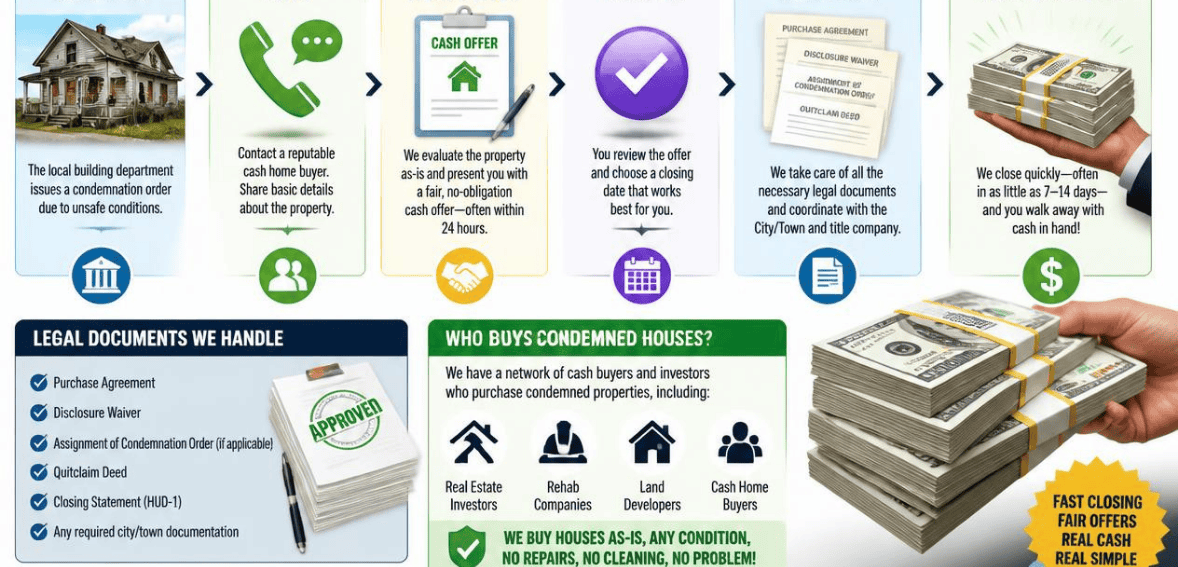
The process itself is refreshingly simple compared to a traditional listing. It starts with gathering your paperwork, including the condemnation notice, the deed, and any records of past repairs or permits. From there, you reach out to a cash buyer, who typically visits the property or reviews photos and public records to assess its condition.
Within a day or two, most buyers present a written offer based on the land value and the cost they expect to sink into repairs or demolition. If you accept, the buyer handles title work and closing logistics, often using a local title company or attorney to make sure everything is legally sound. Funds are wired or handed over at closing, usually within one to two weeks of accepting the offer.
What to Expect in Terms of Price
A condemned property is never going to sell for the price it would otherwise get if the house were in a livable state. The buyers will look at these situations and, more or less, arrive at an offer priced at what they think the land is worth. Then, they will deduct what they think it will cost to demolish it, clean it up, or make extensive repairs.
Then, they will add a risk margin. Offers can also differ based on location, lot size, and how much of the property is actually valuable. For example, a Wilmington condemned property that has a good lot and only a little damage will be offered much more than a total-loss, fire-damaged property in the deep parts of Sussex County.
One of the easiest ways to really find out how much a property can actually be worth is to get multiple offers before signing it away for the first offer.
Working with a Local Cash Home Buyer Versus a Real Estate Agent
Marketing a property for sale brings in buyers across the spectrum for the majority of homes. But for condemned homes, real estate agents have a more difficult time. Many agents will have candid conversations with potential sellers that showings can be restricted by local authorities. Also, buyers with financing are basically eliminated from the buying pool, making it even more challenging.
A cash buyer removes the steps of marketing the property and purchases it as is. The benefit of the sale is the assurance and speed, with the trade-off of a lower sale price. In some cases, property owners are in more difficult financial situations with significant tax bills or are in a more difficult position with demolition deadlines.
For those property owners, that trade-off is worth it. For property owners without that trade-off, it may be worth it to consult with an agent, especially with more time to spare, to get a second opinion before they take further steps with the sale of the home.
Conclusion
A condemnation notice feels like the end of the road, but it isn’t. Delaware law allows you to sell, and a growing number of cash buyers exist specifically to take these properties off your hands, repairs and all. The key is understanding your situation clearly: know why the house was condemned, know your disclosure obligations, and know your timeline before you start fielding offers.
Whether you choose a fast cash sale or decide to invest in repairs first, the worst move is doing nothing and letting the deadline pass. Take the notice seriously, gather your documents, and start exploring your options today so the property stops being a source of stress and starts being resolved.
Frequently Asked Questions
Can I sell a condemned house in Delaware without making any repairs?
Yes. Cash buyers and real estate investors regularly purchase condemned properties as-is, factoring repair or demolition costs into their offer instead of asking you to fix anything first.
Do I have to tell buyers that my house was condemned?
Yes. Delaware’s disclosure law requires sellers to reveal known material defects, including a condemnation notice, in writing before a buyer makes an offer. Failing to disclose can expose you to legal liability after closing.
How long does it take to sell a condemned house for cash in Delaware?
Most cash sales close within one to two weeks after the offer is accepted, since there’s no mortgage approval or lender-ordered repair list slowing things down.
Will I get less money selling a condemned house compared to a normal sale?
Generally, yes. Offers reflect land value minus the estimated cost of repairs or demolition. Comparing multiple offers before accepting one helps you avoid leaving money on the table.
What happens if I ignore a condemnation notice in Delaware?
Local authorities can take further action, which may include ordering demolition at the owner’s expense or, in eminent domain cases, transferring ownership to the government with compensation. Acting before the deadline gives you far more control over the outcome.