

Found out your Delaware home has an open permit right before you planned to sell? You are not alone. Thousands of homeowners discover unresolved permits during a title search, a home inspection, or a quick call to the county office. It feels like a roadblock. It is not the end of your sale.
In Delaware, you can sell property even with open permits. You must be informed about the choices available, your responsibility to disclose the information, and how buyers and lenders may react. This guide provides extensive information on locating open permits, closing permits, proper disclosure, and setting sale prices to facilitate your sale.
What Is an Open Permit and Why It Matters When Selling in Delaware

An open permit is a building permit that was issued for work on a property but never officially closed out. Closing a permit requires a final inspection and sign-off from the local building department. When that step gets skipped, the permit stays open in county records, sometimes for years, even decades.
More than likely, this situation occurs where you least expect it. There are many possible things a former owner could have done, such as adding on a deck, finishing the basement, or replacing the roof. They may have, however, forgotten to schedule a final inspection. Sometimes the contractor completing the job will also pull a permit and never go the extra step to close it. The paperwork basically gets lost due to lack of follow-up. The permit stays with the property, so it is the current owner’s obligation to resolve it before or during the sale of the property.
Delaware does not have a unified building code across the state. New Castle County, Kent County, and Sussex County all have separate permitting regulations. This means if you want to find and close an open permit, you will likely have a different process depending on where your property is located. A homeowner who is located in Wilmington will need to work with New Castle County’s permitting office. However, a seller who is located near Rehoboth Beach will work with Sussex County’s permitting office.
How to Find Out if Your Delaware Home Has Open Permits
Before you list your property, check for open permits. Waiting until a buyer’s title company flags the issue puts you in a weaker negotiating position and can delay closing.
Start by contacting the building or permitting department in your county. In Sussex County, property owners can access a self-service system to view both active and completed building permits for their property. New Castle County and Kent County have permit tracking systems as well, although the details available will depend on the particular jurisdiction.
You can also find third-party permit lookup services that cover Delaware building permits for residents in Dover, Newark, Middletown, Milford, and Georgetown. These services can help if you would like to conduct a preliminary search prior to calling the county.
Reach out to the contractor you employed for your renovations if you have one. Most contractors pull permits and request the final inspection on behalf of the homeowner. It’s possible that the contractor left a permit open because the final inspection was never scheduled and the work was completed according to code.
Your Options for Handling Open Permits Before You Sell
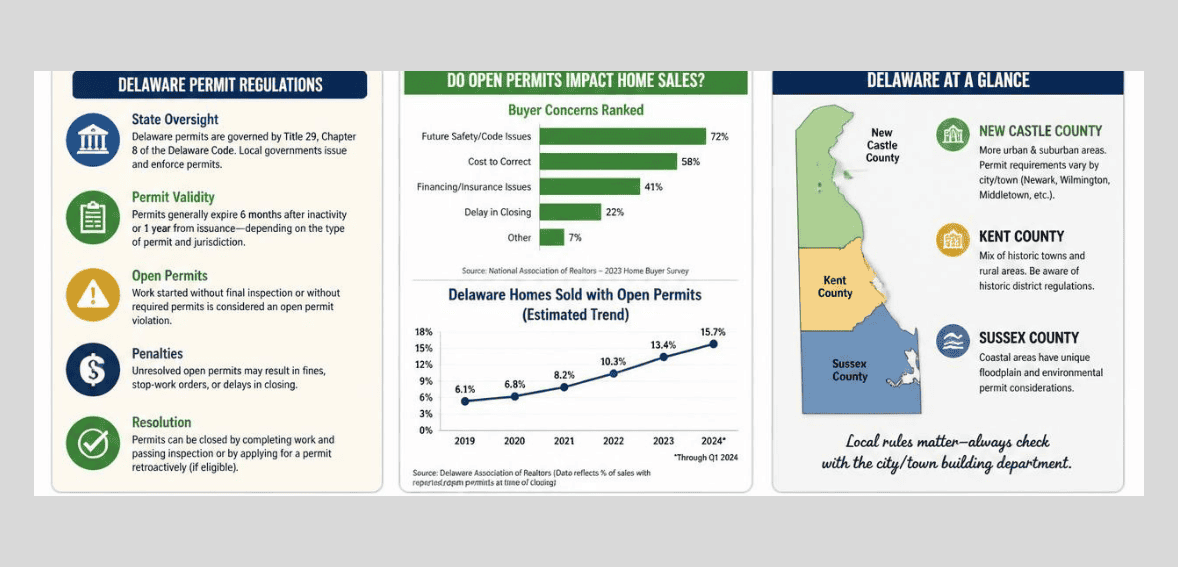
Once you know a permit is open, you have three realistic paths forward, and each one affects your sale differently.
The cleanest option is usually closing the permit yourself prior to listing. This typically involves completing all outstanding work, reaching out to the original contractor (if applicable), and arranging a final inspection with the county building department. The inspection will be completed and the permit will be signed off, closing it out and removing the need to disclose it.
Many real estate professionals state that there is usually no cost to this option, since the permit work was completed properly and just recorded as closed. However, if there is work to be completed, this option usually ranges from a few hundred to a few thousand dollars, depending on the requirements of the inspector.
Another option is offering a credit to the buyer. This involves full disclosure of the open permit and negotiating a price reduction or a credit at closing that would be sufficient to cover the buyer’s costs to resolve the open permit after closing. This typically works best when you do not want to delay closing until the county-arranged inspections are completed. The main risk is that some buyers will simply not be interested in purchasing the property with an open permit, regardless of the credit.
Path three is selling as-is with full disclosure. You will indicate the open permit on your Seller’s Disclosure of Real Property Condition Report. The buyer then agrees to purchase the property with the open permit. This is most effective for cash buyers and real estate investors who will deal with permit resolution and who will not utilize traditional mortgage financing.
How Open Permits Affect Financing and Closing in Delaware
Open permits rarely stop a sale outright, but they can complicate financing. Lenders underwriting FHA and VA loans tend to be stricter about unresolved permits than conventional lenders. Some will require the permit to be closed before they release funding, which can stall your closing date if the resolution process takes weeks.
Because open permits do not usually affect the title the same way as a lien or judgment, title companies will most often underwrite title insurance with a known open permit. The title company will recognize the open permit, and if your buyer’s attorney or agent has not already addressed the issue during negotiations, it will be brought up. Of course, it will be addressed in your disclosures.
Permitting issues that come up late in the process, especially close to your settlement, will inevitably delay the closing as everyone will need to figure out what the next steps will be. This is why you will want to address permits before you list. It will save you time and stress.
Selling to a Cash Buyer With Open Permits in Delaware
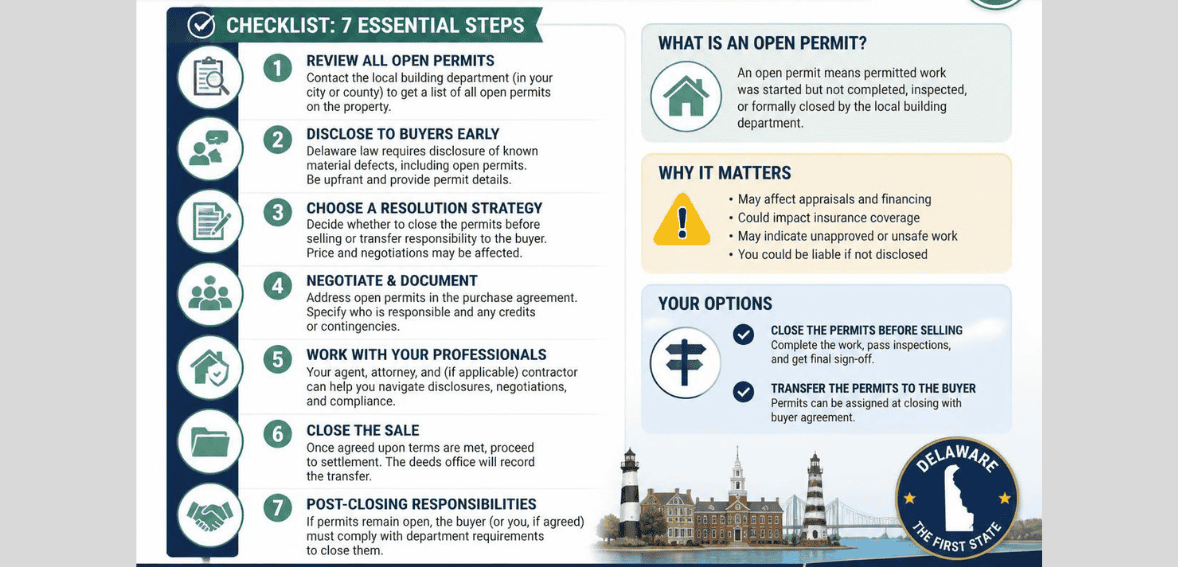
If closing out permits sounds like more time and money than you want to spend, selling to a cash home buyer is worth considering. Cash buyers and real estate investment companies purchase properties as-is on a regular basis, including homes with open permits, code violations, or unfinished renovations. Because they are not using traditional mortgage financing, the lender restrictions that complicate permit issues for conventional buyers simply do not apply.
Opendoor
Opendoor is one of several iBuyer companies that purchase homes directly from sellers, often closing in a matter of days rather than months. Selling to an iBuyer can bypass many of the financing hurdles tied to open permits, though these companies typically offer below-market pricing in exchange for speed and certainty.
Delaware Real Estate Investors
Real estate investment companies within New Castle, Kent, and Sussex counties buy properties with issues. This includes homes with permits that haven’t been closed out. These buyers typically don’t have an inspection contingency. Because of this, sellers looking for a quick sale don’t have to deal with resolving permits themselves.
In this case, it’s a good idea to get everything in writing. If the buyer accepts the property with an open permit, then the purchase agreement should state who is responsible for closing it, and by what date this needs to be done. This will ensure that the agreement is binding and protects the seller and the buyer.
Pricing Your Delaware Home With an Open Permit
Open permits, even for unobtrusive work, will elicit concern from buyers. To mitigate this, set the selling price to include your estimate for the cost to close the permit. Rarely will buyers overlook open permits, but if you do have a closing work estimate, be sure to include this in your negotiations. This provides buyers with a real dollar value as it addresses the permit closure cost as opposed to your selling price, and gives you the opportunity to explain the work scope.
Presented along with a work scope, open permits that are documented and disclosed will get buyers to recognize your listing price as being close to market value. On the other hand, permit problems that are disclosed with no explanation, or poorly explained, will lead buyers to avoid your listing or make aggressive offers, typically well below your asking price.
Conclusion
Selling a house with open permits in Delaware is entirely possible, and it does not have to derail your timeline or your sale price. The key steps are straightforward: find out whether open permits exist, disclose them honestly on your Seller’s Disclosure of Real Property Condition Report, and choose the resolution path that fits your budget and timeline, whether that means closing the permit yourself, offering a buyer credit, or selling as-is to a cash buyer.
Delaware’s disclosure law exists to protect both sellers and buyers, and working within it, rather than around it, is what keeps your sale on solid legal ground. With the right documentation and a clear strategy, an open permit becomes a manageable detail in your sale rather than a dealbreaker.
Frequently Asked Questions
Can I sell my Delaware house without closing an open permit first?
Yes. You can sell a house with open permits in Delaware as long as you disclose the permit on your Seller’s Disclosure of Real Property Condition Report. Many sellers choose to offer a credit or sell as-is rather than closing the permit before listing.
Will an open permit show up during a title search in Delaware?
Not always. Open permits are typically tracked by county building departments rather than title records, so they do not automatically surface the way liens or judgments do. This is exactly why checking with your county’s permitting office before listing is so important.
How much does it cost to close an open permit in Delaware?
Costs vary widely depending on the county and the scope of the original work. In many cases, closing a permit involves little to no cost beyond scheduling a final inspection. If additional work or repairs are needed to meet current code, costs can run into the thousands.
Do cash buyers care about open permits on a Delaware property?
Cash buyers and real estate investors are generally more comfortable purchasing homes with open permits than traditional buyers using mortgage financing. They typically factor the resolution cost into their offer rather than requiring the seller to close the permit beforehand.